
Lukas Kranzl
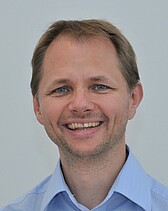
Lukas is a Senior Scientist and thus permanent scientific staff member at the Energy Economics Group (EEG) since 2002. He holds a master's degree in Mechanical Engineering and Industrial Economics (1999) and a PhD in Energy Economics (2002), both from TU Wien. Lukas joined EEG in 1999 where he started as a research associate working on the energy transition and decarbonisation of building related energy demand and supply as well as the heating and cooling sector in an integrated energy system in a wider context. His fields of research include techno-economic assessment and modelling of energy performance of buildings, district heating and cooling and related sector-coupling options in future energy system decarbonisation scenarios. In this context, open source modeling and visualization of spatially resolved energy systems at different levels of granularity plays a major role. He has in-depth knowledge and experience in coordinating international, European and national research projects in this field for a variety of different clients. Lukas also teaches in various courses and has a considerable number of conference contributions and scientific publications in journals.
Milestones
- 2003 — date
- Senior Scientist at EEG, TU Wien
- 1999 — 2002
- Research Associate and PhD Candidate at EEG, TU Wien
Projects
-
 2025
—
2028
2025
—
2028
- FlexGeo
Shaping the future of flexible geothermal energy
-
 2025
—
2028
2025
—
2028
- PLANtoACT
Bridging the Gap from Planning to Action: Capacity Building for Regions and Municipalities in Implementing Clean Energy Transition Strategies
-
 2024
—
2027
2024
—
2027
- ReLIFE
Open source platform and services to boost the market of deep building energy refurbishment in Europe
-
 2024
—
2026
2024
—
2026
- PEDvolution
Interoperable solutions to streamline PED evolution and cross-sectoral integration.
-
 2023
—
2026
2023
—
2026
- OneClickRENO
Equipping buildings with automated, massive and customized Building Renovation Passports as an effective tool to drive deep renovation
-
 2023
—
2026
2023
—
2026
- EPBD.wise
Effective implementation of the EPBD in line with short-term and long-term policy requirements